What Makes A Good Interior Design Client?

People often ask what makes a good interior designer.
Far fewer people ask what makes a good client.
The reality is that the success of a renovation doesn't rest solely with the designer or architect. It's a collaboration, and the projects that turn out best are almost always built on trust, communication and a shared commitment to the process.
Over the years, I've worked with wonderful clients who simply found decision-making difficult. They weren't demanding or unreasonable, but constant uncertainty made the project harder than it needed to be.
As designers, it's our responsibility to explain the process clearly. We should help clients understand what happens at each stage, when decisions need to be made and what information we need in order to keep the project moving.
But there are a few things clients can do that make an enormous difference too.
Choose A Designer You Trust
Finding the right designer isn't just about their portfolio.
It's about whether you feel comfortable working with them over the course of many months.
There will almost always be a point during a renovation when nothing feels finished. Walls are half painted, furniture hasn't arrived and decisions you've already made suddenly start to feel questionable.
At that moment, what matters most isn't certainty.
It's trust.
If you've chosen a designer because you believe in their work, allow them the space to bring the project together.

Your Brief Doesn't Need To Be Perfect
Many homeowners worry they need to have every detail worked out before speaking to a designer.
In reality, that's rarely the case.
A rough budget, a floor plan and a handful of images showing what you like are often more than enough to begin.
One of the most valuable parts of the design process is helping shape the brief itself. Through conversations, questions and exploring different options together, the project gradually becomes clearer.
You don't need all the answers on day one.
Make Decisions When They're Needed
Every renovation follows a sequence.
Layouts come before joinery.
Joinery comes before finishes.
Finishes come before furniture.
When a decision reaches you, try to make it with confidence.
Changing your mind is sometimes unavoidable, but revisiting decisions weeks later often has consequences that aren't immediately obvious. It can affect drawings, lead times, budgets and the wider construction programme.
Momentum is one of the most valuable things on a renovation.
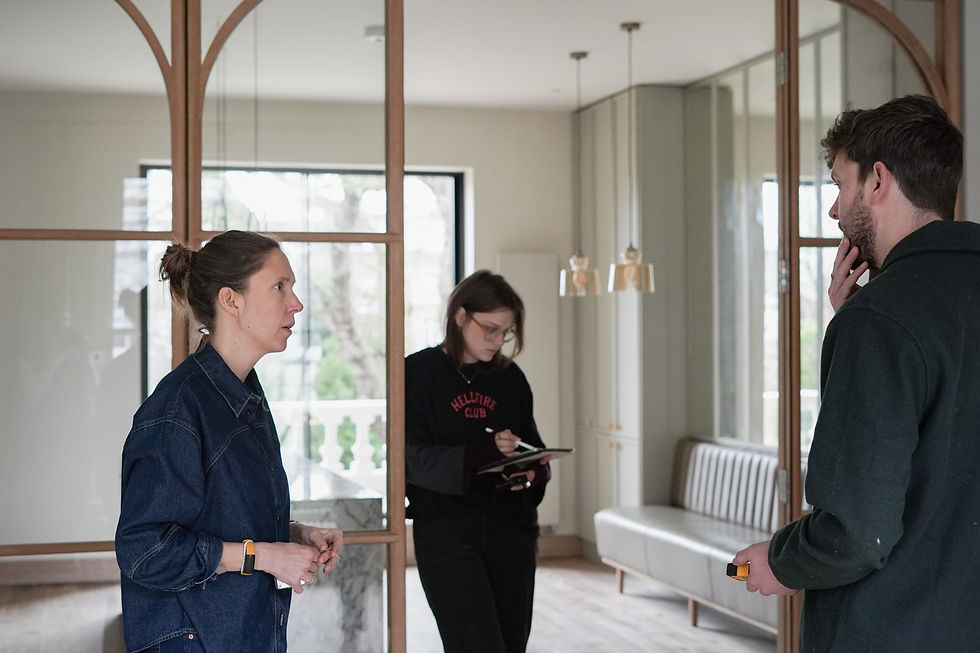
Stay Curious
The most enjoyable projects never feel purely transactional.
They feel collaborative.
Ask questions.
Share ideas.
Reply when your designer sends inspiration or an update from site.
That enthusiasm creates a much more rewarding experience for everyone involved and often leads to a stronger outcome.
At its best, residential interior design is a conversation rather than a transaction.
The designer brings experience, creativity and technical knowledge.
The client brings their life, their aspirations and the trust needed to turn ideas into a home.
If you're thinking about starting a residential renovation project or would like to understand more about how we work, you can explore our FAQs or get in touch to discuss your project.


