This is what happens when the client is as bold as the designer
Updated: Jun 16

There are projects where everything clicks. The ideas come quickly, the client trusts you, the contractors deliver, and you end up with a house that makes everyone involved smile. Our recent project in Shepherds Bush was one of those.
I don’t say that lightly. Every project teaches you something, but this one felt different: it gave me space to turn up the volume on my design voice, and reminded me why the relationship between designer and client matters so much more than most people realise.

Starting with what matters
Within three weeks of starting, the linchpin ideas for the house were already in place. That’s not unusual: design concepts can arrive quickly when I’m in what I think of as the active designing state. The questions are right at the front of my mind, so answers come from unexpected places: a tube journey, a painting I happen to notice, the clothes someone is wearing. I’m not passively waiting for inspiration, I’m consciously looking for it.
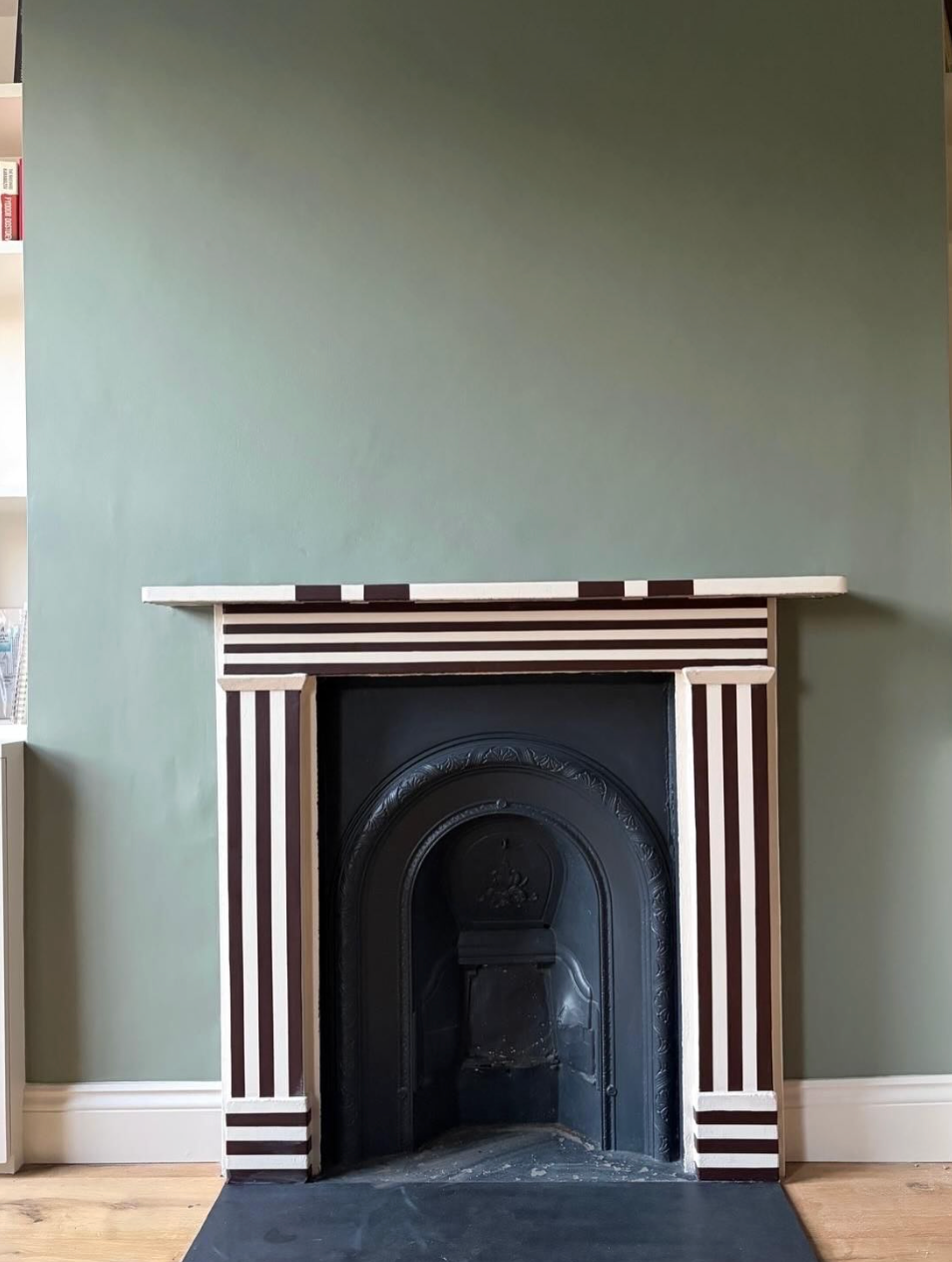
For this project, I knew early on that we’d be doing bespoke joinery elements, and that the kitchen would pair marble with bold geometric tiles. We had a north star image for the joinery, and a photo reference from the clients’ house in South Africa. The ideas locked in fast and they held.

A client who wanted to play as much as the designer
I have to talk about the clients, because the design wouldn’t have been what it is without them. They’d give me feedback on the same day. Payment on the same day. They were genuinely prepared to invest in the interesting choice, not just the safe one.
They were art mad: their three-year-old had books about Frida Kahlo, which told me something about this household. This was a family who wanted their home to reflect who they actually are.
Working with a client like that gives you permission to be bolder. On this project I was able to develop the louder side of my design voice: bold, considered, and joyful.
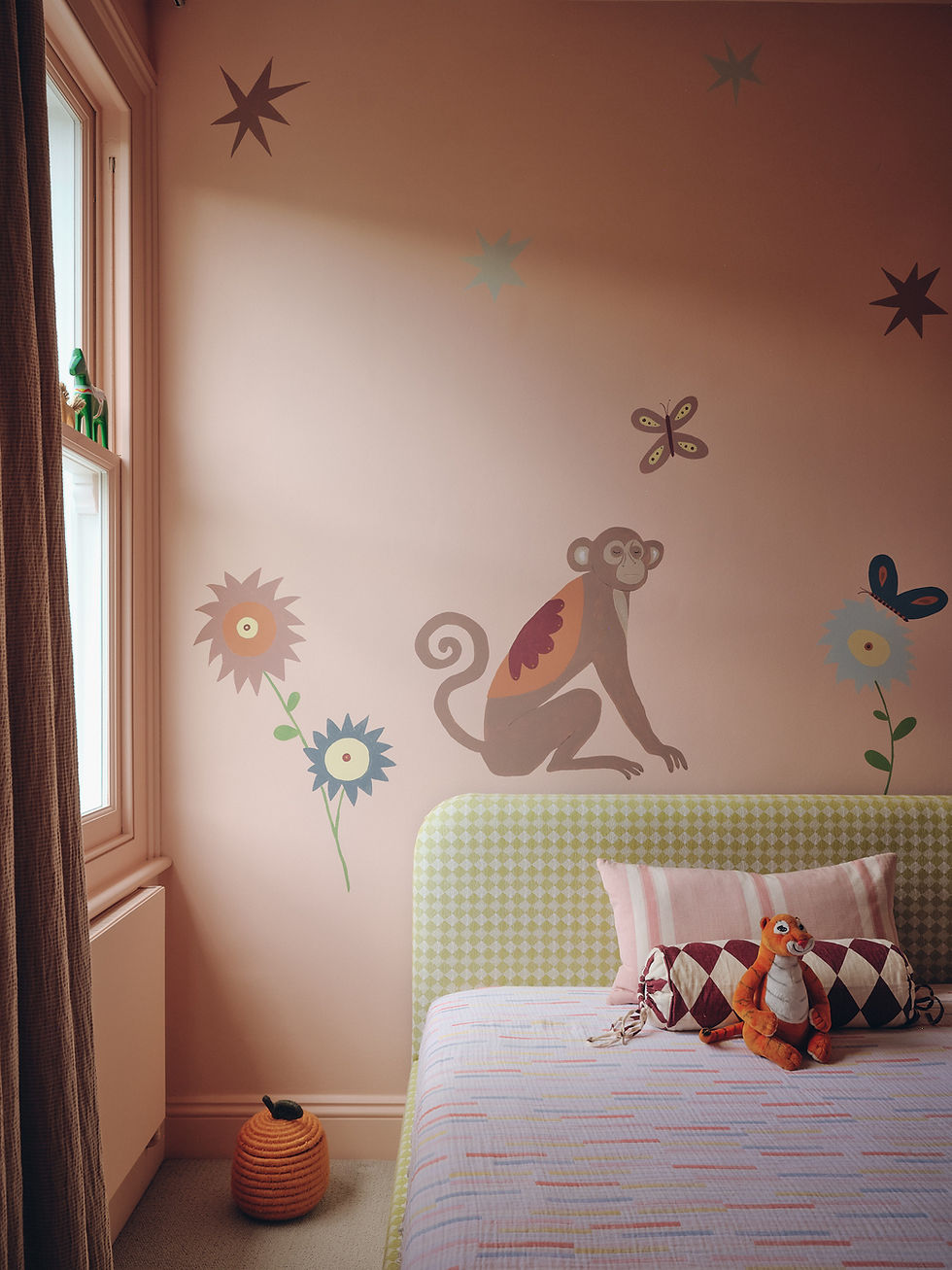
For the children’s bedrooms, I commissioned murals from Izzy Bourdillon, a brilliant muralist I’d been wanting to work with for a while. I saw an image of a leopard she’d painted and it leapt out at me. The defining colour for the second bedroom came from a single image: a warm, yellowy, peachy hue that was almost aggressively unfashionable, proper 90s and borderline orange. We had it mixed as a bespoke colour from Coat Paints. It shouldn’t have worked but it absolutely did.

The people who make it possible
Good design isn’t a solo act. I’ve wanted to write about this for a while, because it often gets overlooked: both by clients assessing what they’re paying for, and by designers who perhaps don’t want to share the credit.
On this project I worked with Justin Plumridge and his team from Simion Construction, who made me feel genuinely supported. Nothing is ever too much bother, and he’s knowledgeable enough to spot what I’ve missed. I also commissioned a hand-painted vintage sideboard from Gosia Roczniak, refining the design together over what felt like hundreds of WhatsApp messages. The details mattered to both of us.
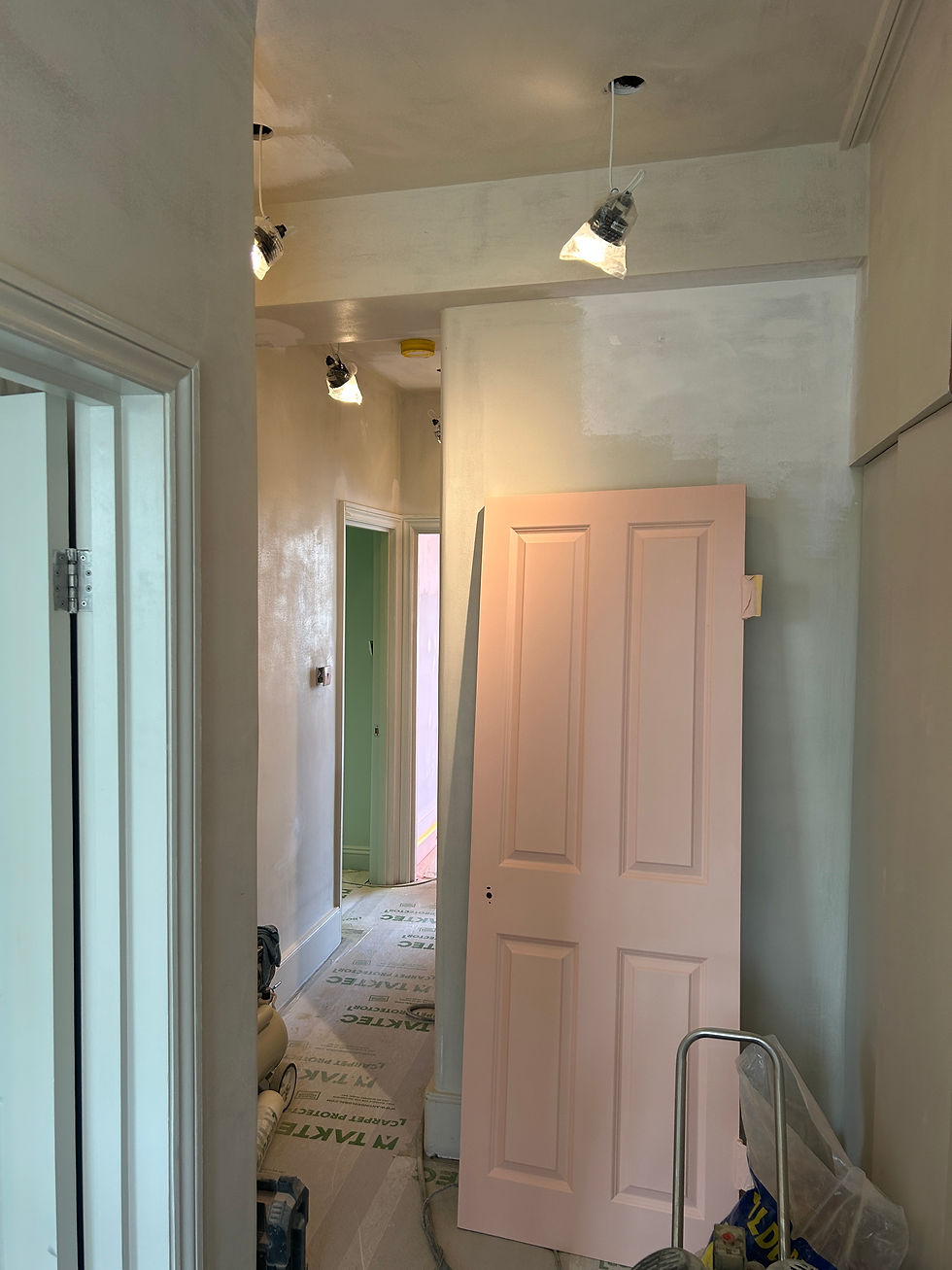
And there’s Ellie Griesen at Studio EG, a lighting consultant, who I now work with as standard on most of our projects. Lighting is one of the most undervalued tools in interior design, sometimes even overlooked by architects.
On this project, Ellie helped me understand how to make the connective spaces, staircases and landings, work as hard as the rooms they lead to. We took a dark warren of a landing and, with repositioned spotlights angled onto artwork and a few additional fittings, turned it into somewhere worth walking through.
The client put it better than I could:
“It is an oasis of colour, wonderful textiles and perfectly balanced materials. It is so much more than we hoped, and most importantly, we all love living in it.”

What this project gave me
When a designer and client are well-matched, ideas build on ideas. The client’s enthusiasm feeds the design, and the design feeds their enthusiasm. That happened a hundred times on this project.
I also got lucky, and I think it’s important to say that. Things can go wrong on sites, expensive things, frustrating things. On this project, they didn’t. Good planning is part of that, but some of it is just down to luck.
What I’m most proud of is that this project let me commission genuinely unique pieces and work with makers in a way that felt meaningful rather than decorative. That’s the kind of work I want to keep doing, and it starts with a client who’s brave enough to go there with me.
If you’re thinking about starting a project and want to understand more about how we work at Kinder, you can find out more from my FAQs.