Designing A Bespoke Bathroom Vanity
There’s something incredibly satisfying about creating one-off pieces for clients.
A lot of interior design happens through layers - colours, textures, layouts, lighting - but bespoke pieces often become the detail that quietly anchors a room and gives it its identity. They’re usually the things people remember most.
Last year we designed a bespoke vanity unit for a client’s bathroom renovation, and it became one of those projects that perfectly captured why I love this side of the process so much.
Starting With The Material
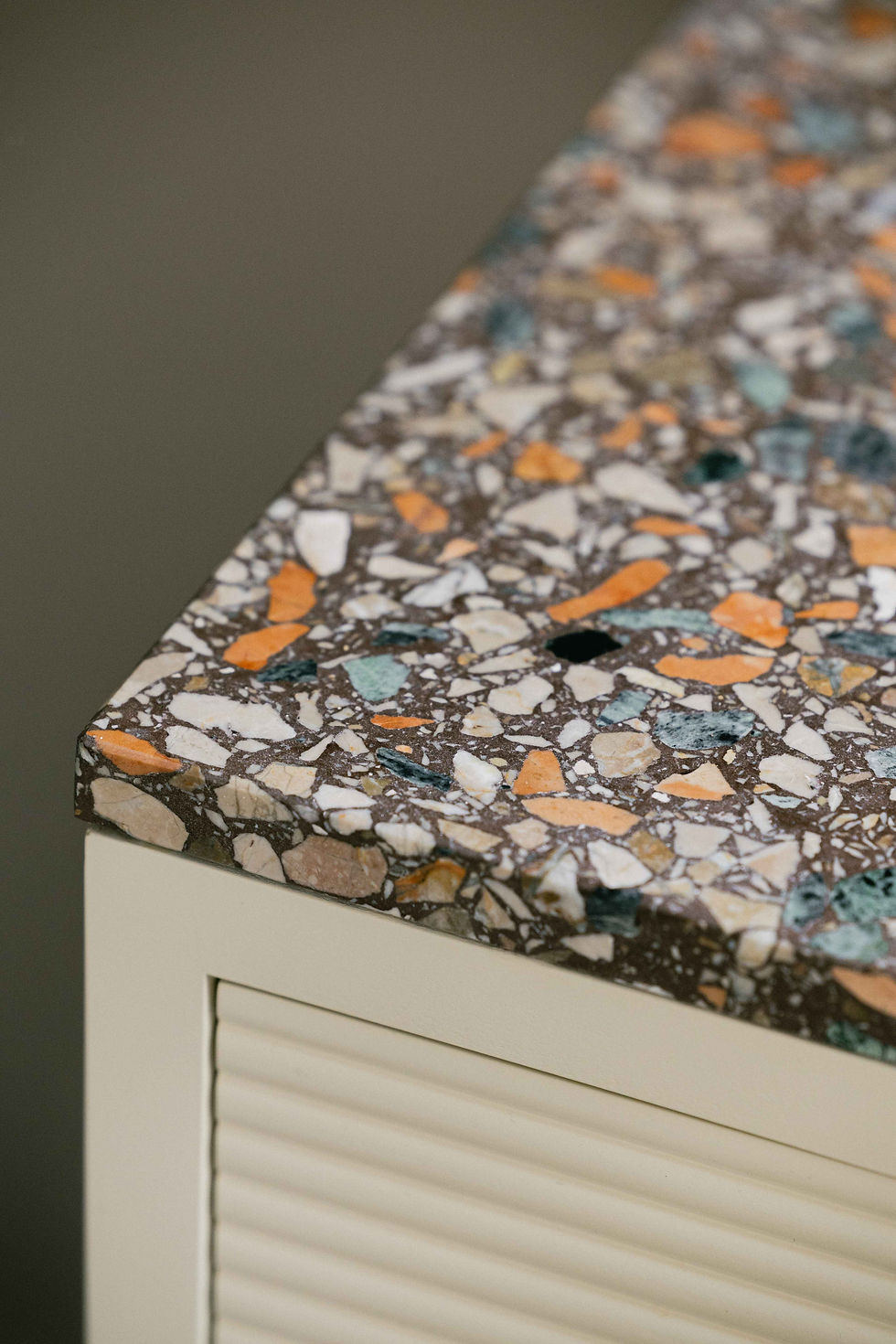
For this project, everything began with the terrazzo.
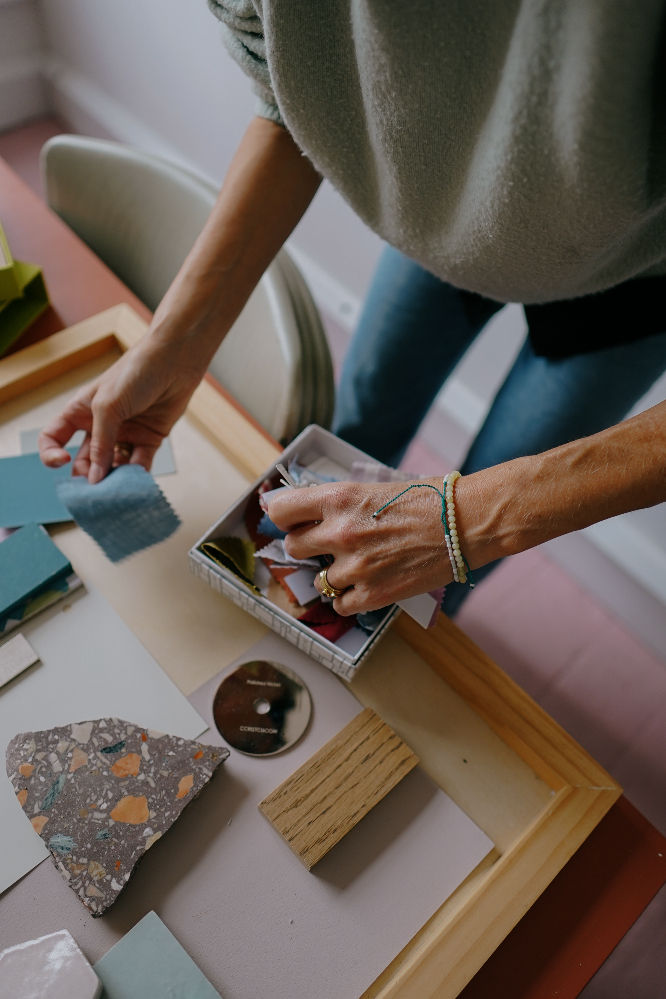
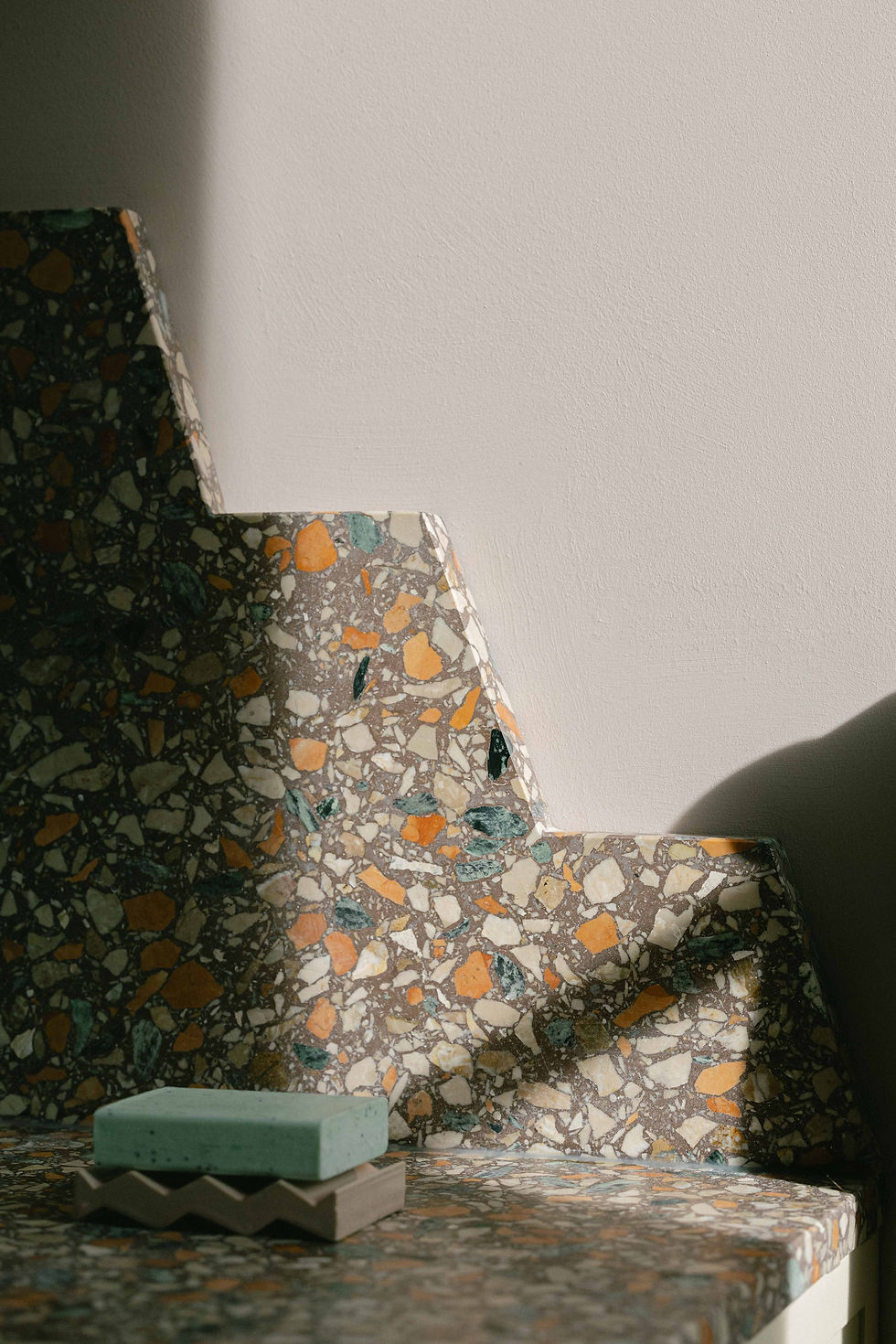
We sourced a beautiful slab from Diespeker & Co that immediately stood out because of its unusual combination of warm brown, turquoise and burnt orange tones. It had so much movement and personality within it that we knew we wanted the stone to become a defining feature within the room rather than simply functioning as a worktop.
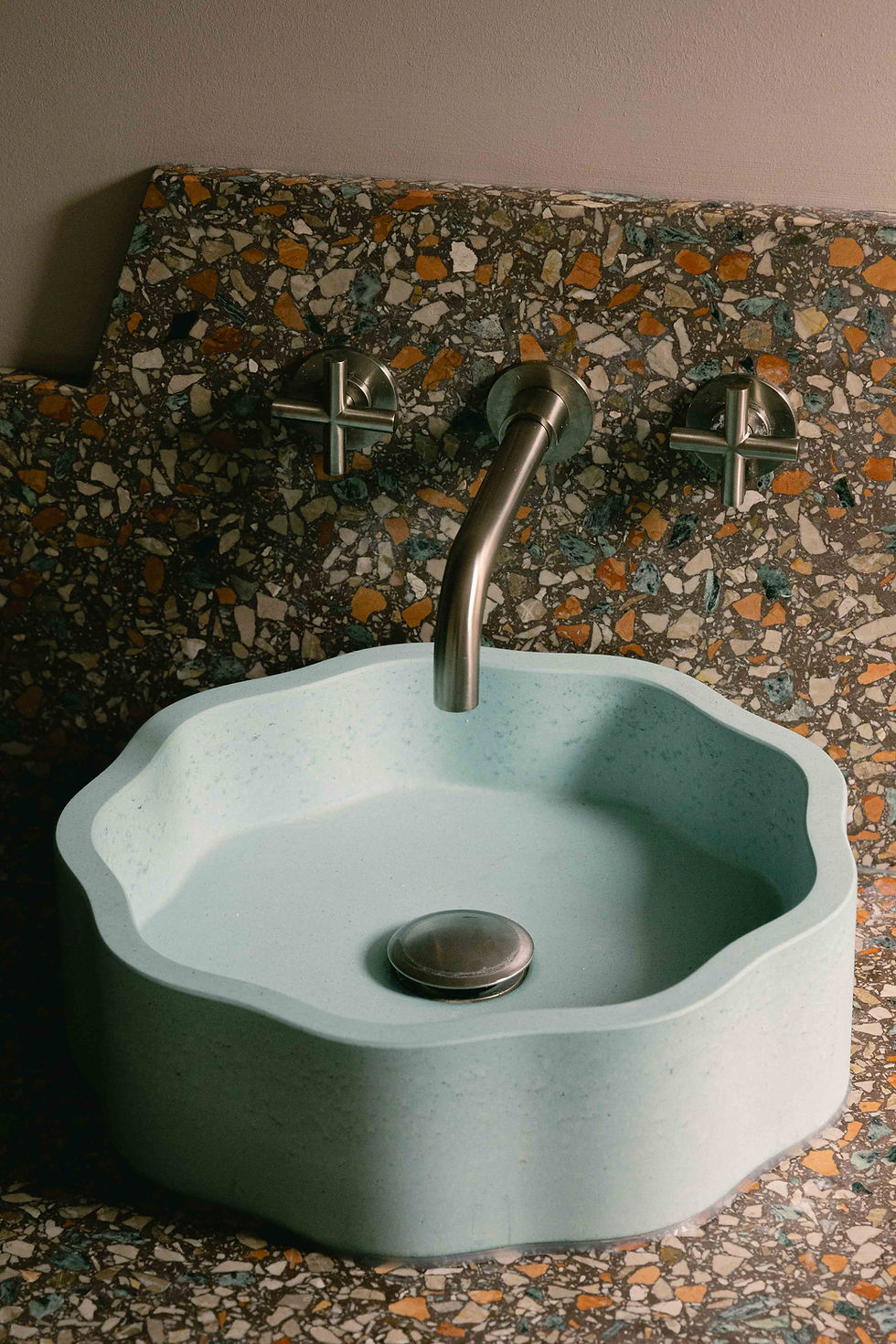
Rather than treating the terrazzo as something flat or purely practical, we designed a ziggurat-inspired splashback shape to give it a more sculptural presence within the bathroom.
I always think bathrooms benefit from moments like this - details that soften the functional side of the space and make it feel more layered, expressive and considered.
Building The Palette Around It
Once the terrazzo had been selected, the rest of the scheme slowly developed around it.
We paired the stone with a pale blue concrete basin from Kast and nickel taps, which introduced a softer contrast against the richness and warmth of the terrazzo itself.
Underneath, the entire piece sits on a customised vanity unit by Parker Howley & Co, which helped ground the design and bring balance back into the overall scheme.
One of the things I enjoy most about bespoke interior design is how materials begin to influence one another throughout the process. Often the palette evolves quite instinctively once the key element has been identified.
The Reality Of Creating Bespoke Pieces
Creating one-off pieces always involves far more collaboration and coordination than people probably realise.
There’s a huge amount happening behind the scenes - refining proportions, sourcing materials, coordinating suppliers and making sure every finish works cohesively once installed.
It’s definitely a slower process than specifying something ready-made, but I think that slower pace is often what gives bespoke interiors their richness and individuality.
Projects like this are also a reminder of how collaborative interior design really is. Bringing custom pieces to life relies heavily on working with skilled makers, joiners and suppliers who genuinely care about craftsmanship and detail.
Why Bespoke Interiors Feel Different
I think bespoke pieces bring a completely different kind of energy into a home.
They create individuality in a way that’s difficult to achieve through mass-produced furniture or fittings. Even subtle custom details can completely shift how a space feels emotionally.
At Kinder Design, we’re always interested in creating interiors that feel personal rather than formulaic - spaces that feel connected to the people living within them rather than simply following trends.
Because often it’s the quieter details - the shape of a splashback, the tone of a material, the way different finishes sit together - that ultimately give a home its character.
If you’re planning a residential renovation or interiors project across London or South East London and would like to explore bespoke design ideas, we’d love to hear more about your project.